
- Lic #292427C NSW plumbing licence — fully insured, water and gas
- Backed for the Long Run Our workmanship carries a lifetime labour warranty, on every job.
- $65 Off Your First Job Knocked off the bill on your first booking with us.
- No Surprises on the Invoice Fair, upfront pricing agreed before we start.
Macquarie Park's Drains: Local Knowledge That Matters
This corridor was once part of North Ryde before growing into a major business, technology and education hub around the university and the surrounding office towers.
That growth has left the suburb heavily paved, and paving changes how water behaves once a storm rolls through.
Stormwater is the dominant local problem, not ageing pipe. Hard surface across the business-park corridor and the Shrimptons Creek catchment leaves rain with nowhere to go but the pits, so older stormwater lines surcharge fast in a heavy downpour.
Waterloo Road and Talavera Road sit at the centre of that paved footprint, where pits built for an earlier era of rainfall now work harder than they were designed to.
The Shrimptons Creek line matters here because it's where much of that corridor runoff eventually lands. When the creek catchment is already full, the pits upstream of it have nowhere to discharge, and the backlog travels in the wrong direction.
A separate story plays out at the edges, where pockets of 1960s-1980s brick-veneer houses back onto bushland near Lane Cove National Park. Mature trees there push into the ageing clay runs still serving those properties.
The paved corridor keeps blocked stormwater busy; the bushland-edge houses are where blocked drain repair earns its keep.
Drain Problems We See Around Macquarie Park
Beyond the stormwater and root patterns above, two more issues earn their spot on the list.
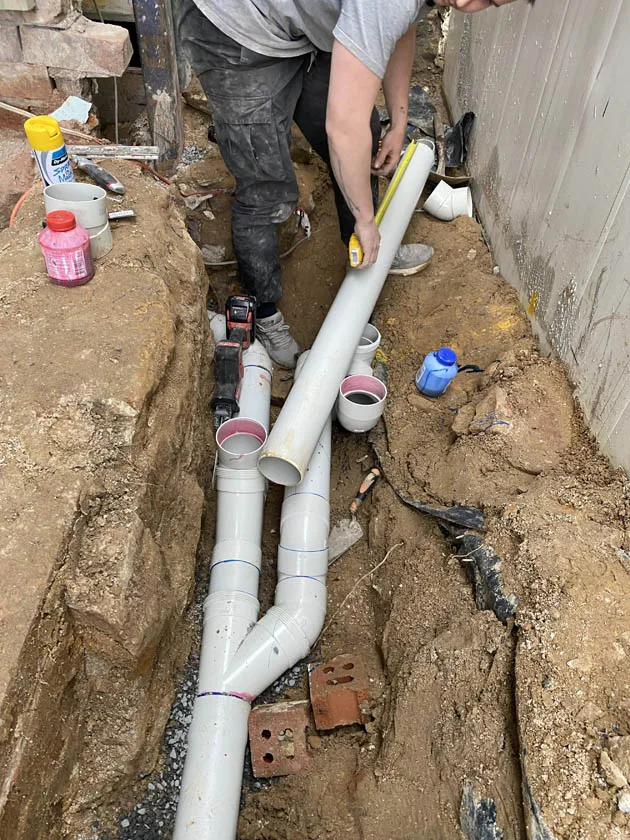
- Reactive clay soil cracking older drainage. The shale clay under the suburb swells with rain and shrinks in drought, and that cycling fractures ageing pipe on the fringe properties.
- Grease from the retail and dining precinct. The shopping centre, the neighbourhood village and the corridor's food outlets all feed drainage that narrows over time without regular attention.
Grease shows itself early: a food-precinct sink that empties slower every month until one day it doesn't.
Cracked clay is louder about it, a drain that gurgles a little more each week until the line finally seizes.
Strata Towers and Shared Drainage
High-rise living dominates here, and shared stacks change what a blockage actually means for the people affected.
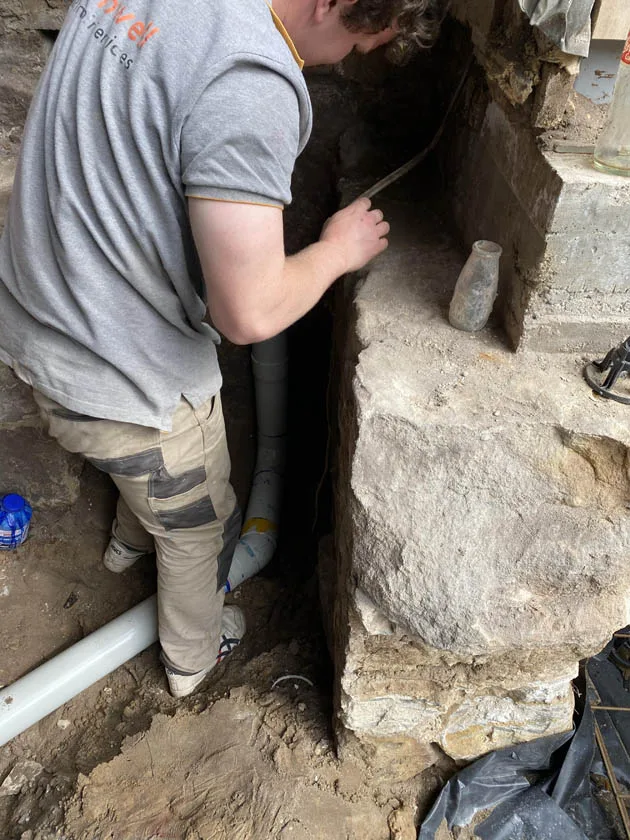
One line often serves a full column of units, so a problem two floors down can surface as a slow drain several levels up.
Strata managers tend to book a camera check as routine once a shared line starts acting up, rather than waiting to see if it clears by itself.
That's a sensible habit. A shared stack that's left to block outright can affect a dozen units at once, and the disruption costs everyone more than an early check would have.
Ground-floor and basement-level units carry extra risk during a heavy downpour too, since they're the first to feel a surcharging stormwater line back up.
Basement carparks in particular can take on water quickly once a stormwater pit upstream loses the fight with a downpour, and by the time it's visible at ground level the line's usually been struggling for a while already.
A camera check early in that process tends to be far cheaper than a pump-out and clean-up after the fact.
Drain Services We Bring to Macquarie Park
Given the mix of high-rise, office and older fringe housing, here's what the corridor books most, roughly in order.
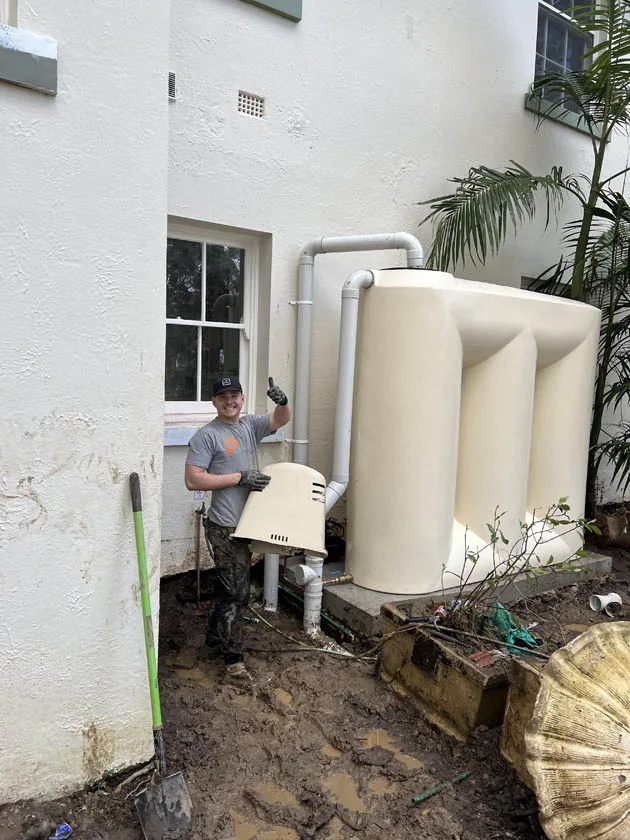
- Blocked stormwater: for the pits the paved corridor overloads in a downpour.
- Drain cleaning: scheduled attention for grease-affected commercial and shared lines.
- Blocked drain repair: fixes a cracked clay joint on one of the older bushland-edge houses.
- CCTV drain inspection: pins down the cause on a shared or commercial line before a fix gets booked.
- Blocked sewer: when a whole building loses its drainage in one hit.
- Blocked toilets: usually the loudest single-fixture complaint.
Towers and office fit-outs mostly need cleaning and camera work; the structural repairs cluster out in the older brick-veneer pocket.
Commercial tenants tend to want a report they can hand to a landlord or centre manager, and the camera footage doubles as exactly that.
Emergency
When Macquarie Park Has a Drain Emergency
A blockage doesn't wait for a convenient hour, and neither do we.
- Rainwater pooling where a pit should be swallowing it.
- A sewage odour rising from a floor grate.
- Several fixtures slowing or gurgling in the same building on the same day.
- A retail sink that's stopped draining altogether.
- A toilet blocking again within days of the last clear.
A real person answers the phone here after midnight, same as midday.
Humid summer storms load the stormwater system and cooling demand at the same time here, and the two often peak together.
When it's the whole building, that's blocked sewer; when it's one stubborn fixture, blocked toilets is the page you want.
Term breaks and semester intakes also bring a wave of tenant turnover through the area's rental stock, and a fresh set of tenants unfamiliar with an older building's quirks is often when a marginal drain finally tips over.
Why Neighbours in Macquarie Park Pick Us
Our week revolves around Gladesville, and the corridor is close enough that it never feels like a trip away.
It's the same council area, so approvals and standards match what we deal with every day.
Diagnosis happens on screen, not by hunch; you see the footage before any decision is made.
A fixed figure gets agreed with you before anyone touches a tool, whether the job's an overloaded stormwater pit on the corridor or a cracked joint out near the bushland edge.
Our Process: Find It, Clear It, Fix It
- Camera first. Footage confirms whether it's stormwater capacity, grease, roots, or a cracked joint before anything's touched.
- Clear it. Most lines respond to high-pressure water jetting; root-bound runs get the electric eel.
- Fix the cause. A failed clay joint gets properly repaired rather than left to fail again next season.
- Check the result. We run the camera back through so the fix is confirmed on screen, not assumed.
A genuinely failed joint on the fringe properties can usually be relined from the access that's already there, no trench through an established garden.
Where a shared building's involved, we let the strata contact know what the camera found as well as whoever placed the call, so the fix doesn't stall between the two.
Where we work
Servicing Macquarie Park from Nearby Gladesville
We service these suburbs on the same trip through the corridor.
Let’s get it flowing again
Blocked Drain in Macquarie Park? Call Now
An overloaded stormwater line or a cracked joint doesn't improve by being ignored. Call (02) 9134 9097, get the price agreed, and have it dealt with properly.
Good questions, straight answers
Your Macquarie Park Drain FAQs
What residents, offices and building managers ask us most.
Is the team licensed and insured for drain work?
Yes. We hold Licence #292427C, insured, with water and gas both covered.
Do weekends work for a booking?
Yes. Saturday and Sunday run exactly like weekdays, price included.
How quickly can you reach a blocked drain in Macquarie Park?
Same-day is realistic for the bulk of calls, with the corridor sitting this close to our run.
Are you actually nearby, or coming from across town?
Genuinely nearby. Gladesville is home turf and the corridor is part of the loop we drive every week.
Is there a fee just to have someone come look?
No call-out fee applies, whatever the property turns out to need.
Why do drains in older Macquarie Park homes keep blocking?
The pocket of 1960s-1980s brick-veneer houses on the suburb's fringes still run early clay drainage that shifts on the reactive shale ground beneath it.